
This publication is an exclusive FullScope Staffing analytical report, integrating proprietary compensation data, regulatory tracking, and cleared workforce intelligence.
Clearance Arbitrage: TS/SCI Full Scope Premium Pushes Elite DoD Cyber Architects & Strategists Towards $270,000 In 2026

Strategic Overview: The Cleared Cyber Workforce Crisis of 2026
The market for high-level, cleared cybersecurity professionals supporting the U.S. Department of Defense (DoD) and the Intelligence Community (IC) is experiencing unprecedented demand, driven by a confluence of regulatory mandates and rapidly escalating threat sophistication. This demand surge has also placed extraordinary pressure on cleared recruiters, who now face historically compressed hiring cycles and increasingly scarce candidate pools. Analysis indicates that the most sought-after roles in 2026 will be those that integrate strategic governance with cutting-edge defensive architecture, particularly within the cloud environment. Crucially, the scarcity of personnel holding top-tier clearances acts as the primary salary multiplier, establishing a robust compensation floor for high-ranking positions.
The Triple Threat Convergence Driving Demand
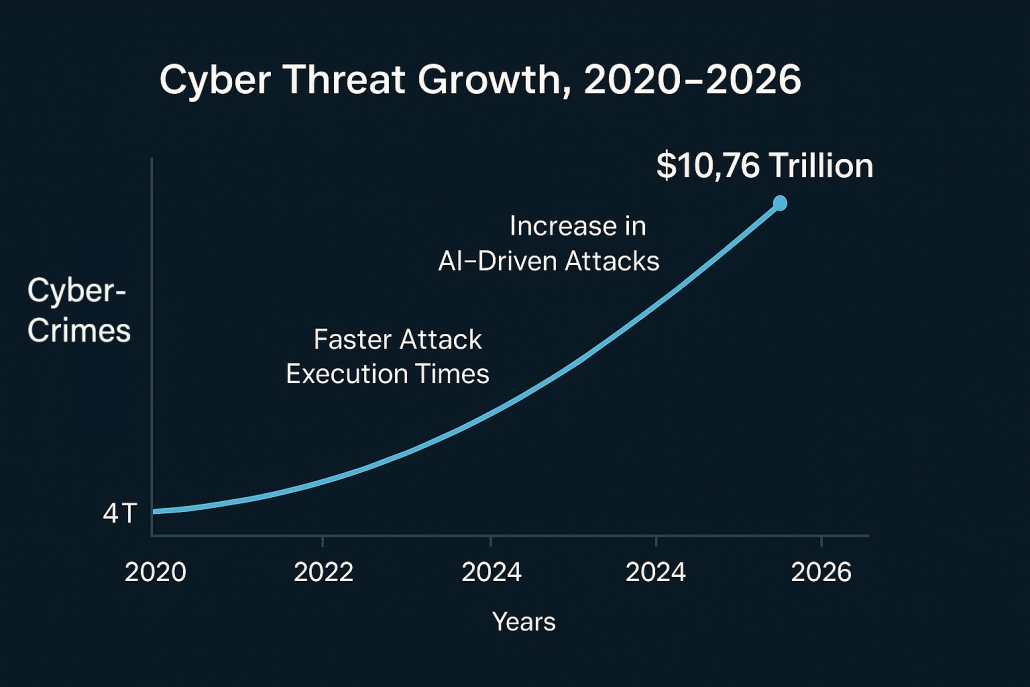
Cyber threats continue to accelerate through 2026, driven by AI-enabled attacks and rising cybercrime costs exceeding $10 trillion.
The cybersecurity threat landscape entering 2026 is defined by three converging forces that necessitate a massive surge in high-level, cleared talent. First, global cybercrime costs are projected to reach $10.76 trillion annually in 2026, a figure that nearly matches the GDP of a major global economy.1 This massive economic impact reflects the escalating danger posed by industrialized cybercrime and geopolitical weaponization of cyber capabilities. Furthermore, autonomous AI agents are enabling attacks to execute up to 100 times faster, forcing the Defense Industrial Base (DIB) to shift decisively toward rapid, automated defense capabilities and proactive threat hunting. 1 For cleared recruiters, this acceleration has created a new reality: sourcing windows have shortened from weeks to hours, and competition for every polygraph-cleared candidate has intensified dramatically.
Second, regulatory requirements have created an immediate and non-negotiable demand for compliance expertise. The final rule incorporating the Cybersecurity Maturity Model Certification (CMMC) program into the Defense Federal Acquisition Regulation Supplement (DFARS) became effective in late 2025.2 This rule creates the mechanism for CMMC 2.0 to be formally included in DoD solicitations and contracts, initiating a phase-in approach requiring compliance across nearly all DoD contractors within three years.2 This regulatory imperative generates immense, immediate demand for specialized professionals who can architect systems to meet CMMC Level 3 and above requirements.
Third, the long-standing mandate under DoD Directive 8140 (formerly 8570) requires that all personnel performing Information Assurance (IA) functions with privileged access to DoD systems hold specific, pre-approved baseline certifications, categorized by level (I, II, or III).3 This requirement ensures that the pool of eligible candidates for high-level technical (IAT), managerial (IAM), and operational defense (CSSP) roles is severely limited, intensifying competition for experienced talent holding critical credentials like the CISSP or CISM. These constraints, taken together, have expanded both the strategic importance and operational burden placed on cleared recruiters responsible for staffing CMMC, 8140, and Zero Trust transformation projects.
The Clearance Dividend: Quantifying the Compensation Premium
The single greatest factor maximizing compensation in the cleared space is the clearance level itself. Data confirms that an individual’s security clearance status serves as a powerful non-technical skill multiplier that unlocks access to the highest-paying roles. On average, professionals with a Top Secret/Sensitive Compartmented Information (TS/SCI) clearance earn $131,907, representing a 40.6% increase over the $93,748 average salary commanded by professionals holding only a Secret clearance.5 For cleared recruitment firms, this wage separation translates into sharply tiered sourcing pipelines, where TS/SCI candidates with in-demand certifications often field multiple competing offers within hours of posting availability. This substantial pay increase is directly attributable to the extensive vetting process required and the resulting scarcity of qualified candidates available for sensitive government missions.
Compensation escalation reaches its peak for professionals required to hold a polygraph examination. A TS/SCI clearance augmented with a Full Scope Polygraph (FSP) pushes national average earnings to $148,314—a 58.2% premium over the Secret clearance baseline.5 In high-cost, high-demand government contracting zones like Washington, D.C., top earners with this combination of clearance and vetting can achieve annual salaries exceeding $206,143.6 This financial reward structure demonstrates a systemic willingness by contractors to pay an additional $15,000 to $40,000 solely for the depth of vetting, confirming that clearance scarcity often outweighs specialized technical skill in setting baseline compensation for highly sensitive roles.
Table 2 details the quantifiable financial value associated with different security clearance levels across the cleared workforce:
Cleared Compensation Premium by Security Level (National Averages)
Clearance Level | Average Annual Salary | Salary Premium Over Secret | Top Earner Potential (75th Percentile) |
Secret Clearance | US $93,748 | Baseline | N/A |
TS/SCI Clearance (Baseline) | US $131,907 | 40.6% | US $147,500 (7) |
TS/SCI with CI Polygraph | US $135,442 | 44.5% | N/A |
TS/SCI with Full Scope Polygraph | US $148,314 | 58.2% | US $186,817 (DC Metro Top 75th) (6) |
The Elite Tier: Strategic and Architectural Roles (The $200K+ Band)
The highest compensation figures are reserved for senior leadership and principal architects who possess top-tier clearance and mandatory DoDD 8140 Level III certifications. These roles are critical because they bear the ultimate legal and strategic responsibility for implementing high-level security controls across federal contracts. These elite-tier roles are also the most challenging for cleared recruiters to fill, particularly when Full Scope Polygraph requirements intersect with Level III certification mandates.
Chief Information Security Officer (CISO) – Cleared Environments
The CISO role in the DIB and IC is fundamentally a governance, risk, and compliance (GRC) position, requiring mastery of both technical domain knowledge and executive decision-making. The individual holds ultimate responsibility for establishing the enterprise-wide cybersecurity strategy, ensuring continuous compliance with regulatory frameworks like CMMC 2.0, and managing corporate liability.2
The essential skillsets for a cleared CISO include expert knowledge in Risk Identification and Management, understanding how to apply security architecture principles, and aligning complex cybersecurity controls with the organization’s business and contractual objectives.9 Due to the managerial and strategic nature of this position, the role typically falls under DoDD 8140 Information Assurance Management (IAM) Level III, requiring mandatory certifications such as the Certified Information Security Manager (CISM), the Certified Information Systems Security Professional (CISSP), or the CCISO.3 Estimated Senior Annual Salary for this elite tier ranges from US $245,000 to over $270,000 per year.8
Principal Security Architect (Cloud/Zero Trust)
Principal Security Architects are the indispensable technical designers who translate the CISO’s strategic vision into defensible, deployable systems. Demand for these professionals is acute due to the DoD’s urgent mandate to modernize its infrastructure by migrating legacy systems to secure, compliant cloud environments using Zero Trust security models.8
Architects must possess advanced Data and Cloud Security expertise, network security control design knowledge, and the ability to integrate security into development pipelines (DevSecOps).9 They must demonstrate profound experience in Security Architecture and Engineering, a core domain of the CISSP certification. This specialization is considered an Information Assurance System Architect and Engineer (IASAE) Level III function under DoDD 8140, necessitating a CISSP or equivalent architectural certification.4 The ability of a Principal Architect to design FedRAMP/DoD-compliant cloud environments and manage the transition to Zero Trust provides the justification for reaching the highest compensation bands. When combined with a TS/SCI Full Scope Polygraph in the DC Metropolitan area, the estimated senior annual salary ranges from US $150,000 up to $206,143 or more per year.6
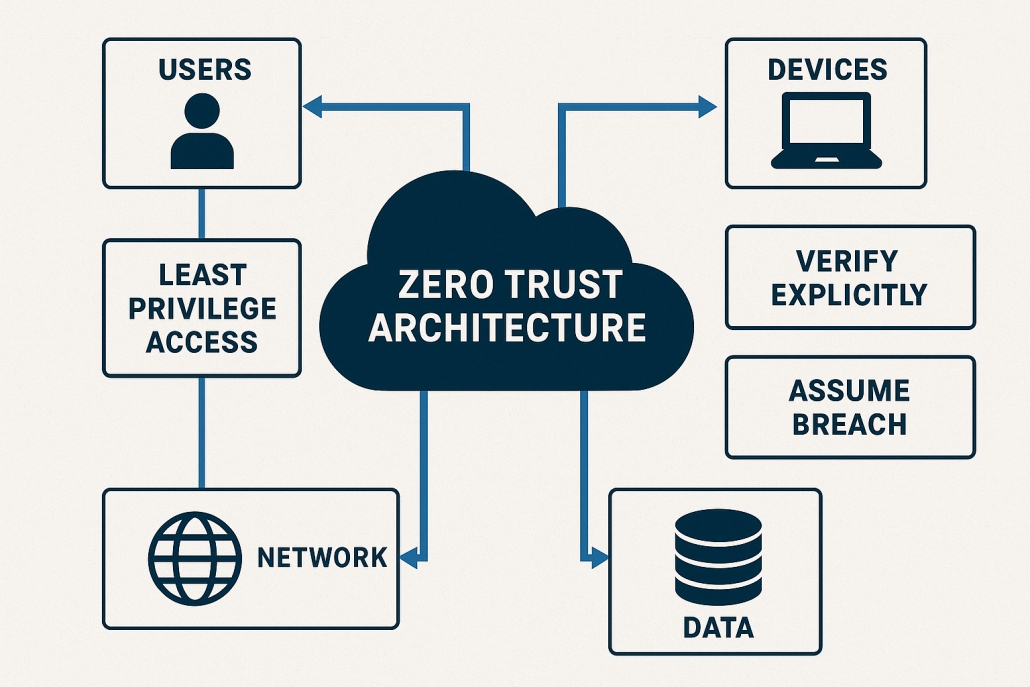
Zero Trust Architecture requires strict identity verification, least privilege access, and continuous monitoring across users, devices, networks, and data.
Core Operational and Emerging Specialized Roles
Beyond strategic leadership, several highly technical, hands-on roles are critical for immediate defense and secure system deployment, offering exceptionally high compensation due to their operational necessity in the face of advanced threats. Operationally focused roles such as these remain among the highest-volume requisitions for cleared recruiters supporting the DIB and IC, yet also among the most difficult to staff due to clearance and certification bottlenecks.
Senior Threat Hunter / Incident Responder (CSSP-IR)
In an environment where AI-enabled attacks execute exponentially faster than human response times, the Senior Threat Hunter and Incident Responder role is crucial for proactive defense. These professionals specialize in Incident Handling and Response, proactively searching for, analyzing, and mitigating advanced persistent threats (APTs) and nation-state actors who are actively pre-positioning within critical infrastructure.1 Rapid containment is paramount, especially considering that the average breach costs organizations $4.88 million and takes 241 days to contain.1
These roles fall under the Cyber Security Service Provider (CSSP) category, specifically CSSP Incident Responder, which requires mandatory certifications like the GIAC Certified Incident Handler (GCIH) or Certified Ethical Hacker (CEH).3 The critical value placed on immediate, high-stakes operational execution is reflected in the high salary ceiling for experienced professionals in this domain. Estimated senior annual salary, maximizing the clearance premium, can range from US $150,000 up to $207,000 per year.8
Cleared DevSecOps Engineer (DCWF Work Role 627)
The DevSecOps Engineer integrates security practices directly into the entire software development lifecycle (SDLC), automating security testing, monitoring, and compliance for critical DoD applications and systems. This operational function is formally recognized by the DoD Cyber Workforce Framework (DCWF) as Work Role 627, confirming its institutionalized demand growth.12
The professional expertise required includes automation scripting, continuous monitoring, and secure coding practices, often demanding advanced knowledge of cloud platforms and the rigorous application of secure development methodologies. The emphasis on securing code at speed is essential to combat autonomous attacks and transition systems securely to the cloud.3 The estimated senior annual salary for a Cleared DevSecOps Engineer with a TS/SCI clearance falls between US $120,000 and $160,000 per year.11
Cybersecurity Engineer / Penetration Tester (Red Team)
These professionals specialize in offensive cyber techniques, conducting ethical hacking, vulnerability assessments, and focused Attack Surface Management.8 Their role is to analyze an organization’s risks and liabilities from the perspective of a hostile hacker, allowing the organization to identify and repair system vulnerabilities before they are exploited.9
Mandatory certifications often required for these roles, categorized under CSSP Analyst or CSSP Auditor, include the CEH, the Certified Information Systems Auditor (CISA), or CompTIA Security+ (for entry-level skills), with GIAC certifications preferred for senior roles.3 The estimated annual salary for a cleared, senior-level professional in this operational defense tier is typically US $100,000 to $150,000 per year.8
Table 1 summarizes the most lucrative and critical cleared cybersecurity roles projected for 2026:
2026 Projected Top High-Paying DoD Cleared Cyber Roles
Role Title | Key Function | Required Clearance/Certifications | Estimated Senior Annual Salary (Maximizing Clearance) |
Chief Information Security Officer (CISO) | Enterprise GRC Strategy, Policy Leadership (CMMC Level 3+) | TS/SCI, CISM/CISSP (IAM Level III) | US $245,000 – $270,000+ (8)
|
Principal Security Architect (Cloud/Zero Trust) | Cloud Architecture, Defense System Design | TS/SCI Full Scope Polygraph, CISSP (IASAE III) | US $150,000 – $206,143+ (6) |
Senior Threat Hunter / IR Specialist | Proactive Threat Analysis, Rapid Incident Handling | TS/SCI, GCIH/CEH (CSSP-IR) | US $150,000 – $207,000 (8) |
Cleared DevSecOps Engineer (DCWF 627) | Secure SDLC, Automation, Cloud Integration | TS/SCI, Advanced Cloud/Security Certs | US $120,000 – $160,000 (11) |
Mandatory Compliance and Essential Skill Foundation for 2026
To qualify for the high-paying roles outlined in the previous sections, professionals must navigate the dual requirements of federal certification mandates and specialization in emerging technical pillars. As compliance requirements intensify, cleared recruiters must increasingly target candidates who combine Level III certifications with hands-on experience in Zero Trust, cloud security, and automated defense.
The Non-Negotiable Barrier: DoDD 8140 Baseline Certifications
DoDD 8140 (formerly 8570) serves as the primary gateway for entry into privileged DoD cybersecurity positions. It mandates that all IA workforce members must obtain and maintain an approved certification corresponding to their job classification.4 The roles commanding the highest compensation fall predominantly under the Level III categories (Technical, Management, and CSSP), signifying the need for substantial experience (often five or more years, as required for CISSP eligibility 10) and enterprise-level knowledge.
For example, achieving Information Assurance Management (IAM) Level III or Information Assurance Technical (IAT) Level III status requires certifications such as the CISSP or CISM.3 This means that while a certification alone does not guarantee a high salary, it acts as a mandatory prerequisite, unlocking access to the positions that pay highly due to the associated clearance premium and strategic responsibility.
Table 3 details the critical certifications required to qualify for Level III cleared roles:
Critical DoD 8140 Baseline Certifications for High-Tier Roles
DoD Workforce Category | Role Examples | Required Technical Depth | Mandatory Baseline Certifications |
Information Assurance Management (IAM) III | CISO, Senior Security Manager | Management, Strategic Risk/GRC | CISM, CISSP, CCISO 3 |
Information Assurance Technical (IAT) III | Senior Cyber Engineer, Security Analyst | Technical, Network Security Control | CISSP, CASP+, GCED 4 |
Cyber Security Service Provider (CSSP) Analyst/IR | Threat Hunter, Incident Responder | Incident Handling and Response | CEH, CySA+, GCIH 3 |
CMMC 2.0: The Regulatory Catalyst for Compliance Roles
The formal adoption of CMMC 2.0 into DFARS mandates compliance for contractors handling Controlled Unclassified Information (CUI).2 This regulatory shift has created an immediate volume-demand crisis for Certified CMMC Assessors and Consultants. While CMMC Assessor national salaries average $75,259 13, the true high-paying opportunities lie with senior CMMC Consultants and Architects who possess top clearances and can implement CMMC requirements at scale.
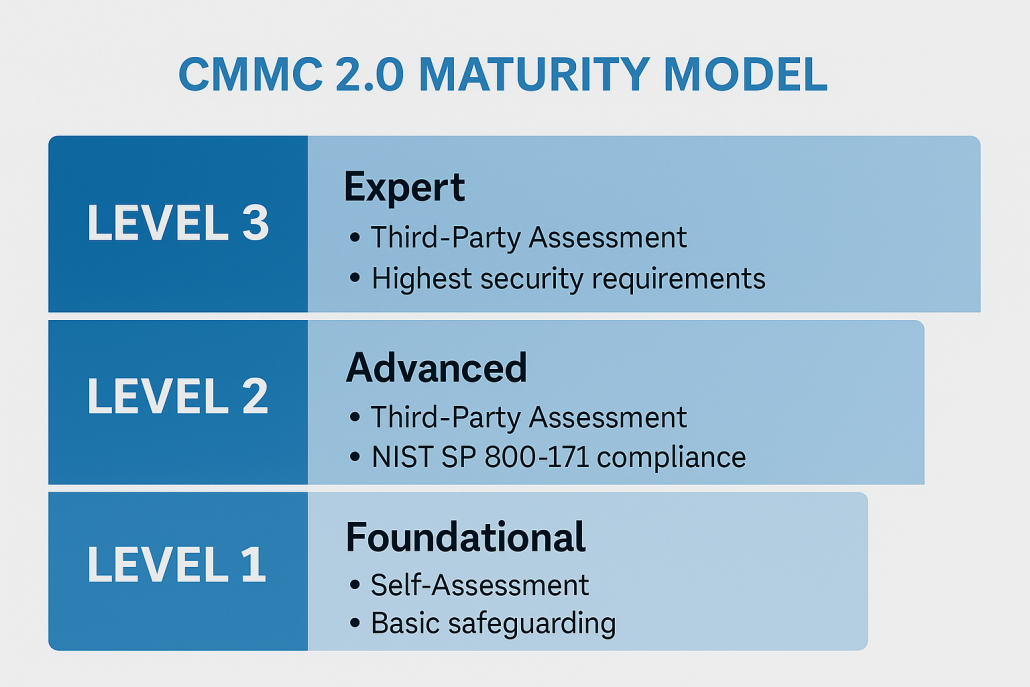
The CMMC 2.0 maturity model outlines three levels of cybersecurity compliance, from foundational safeguarding to expert third-party assessments.
In high-demand zones such as Washington, D.C., CMMC Assessor salaries average $82,545, with top earners reaching $127,777 annually.14 The critical, highest-paying CMMC work involves not mere documentation, but guiding large organizations through Level 3 compliance and building the necessary secure architectures, requiring a fusion of GRC skills (CISA, CISM) and technical cloud and network implementation skills.9 This shift has also created a sustained wave of high-priority requisitions for cleared recruiters tasked with sourcing senior CMMC consultants, assessors, and cloud-compliance architects with TS/SCI access.
The 2026 Technical Skill Pillars
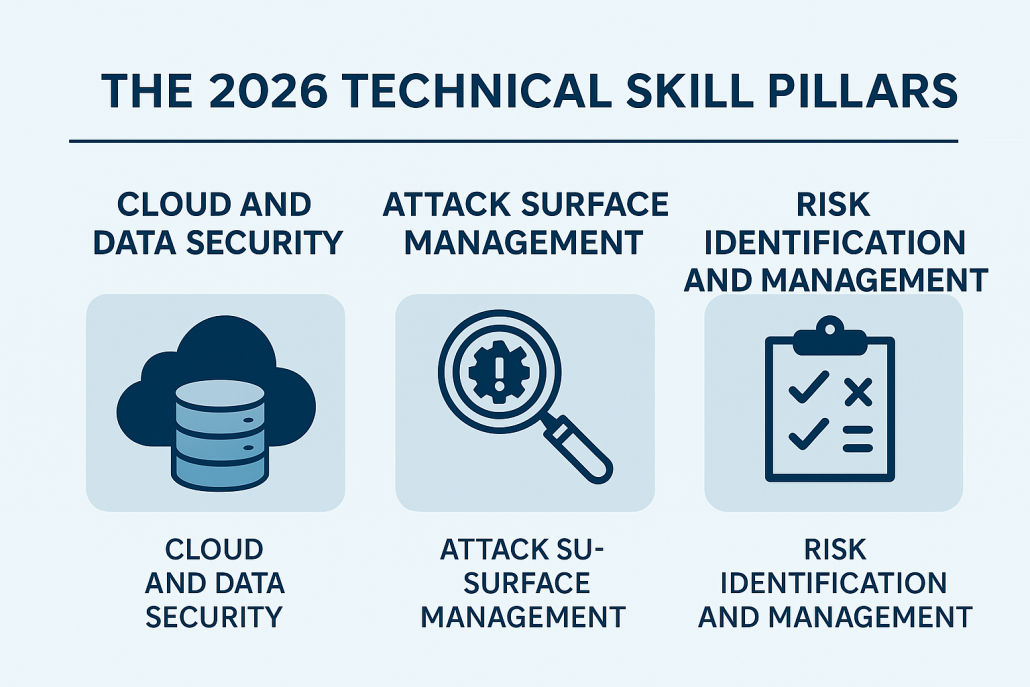
Key technical skill pillars for 2026 include cloud security, attack surface management, and risk identification and management.
High-value cleared roles require demonstrable expertise in modern, proactive defense mechanisms to address the evolving threat environment.9 The key technical specializations are:
- Cloud and Data Security: Essential for the DIB’s ongoing digital transformation and the protection of sensitive data in DoD-approved cloud environments.9
- Attack Surface Management: Critical for Penetration Testers and Architects, focusing on continuous analysis of an organization’s risks from the perspective of an adversary.9
- Risk Identification and Management: Core to satisfying the GRC requirements of CMMC and foundational for all strategic, high-level positions.9
Finally, future high-paying roles are anticipated to include advanced specialization in automated defenses. The DoD’s Chief Digital and Artificial Intelligence Office (CDAO) is actively recruiting world-class talent to drive the adoption of data and AI.15 The formal recognition of the “Artificial Intelligence/Machine Learning Specialist” within the DoD Cyber Workforce Framework (DCWF) 12 signals that advanced DevSecOps Engineers, Threat Hunters, and Architects who specialize in developing and deploying defensive AI/ML models will constitute a highly compensated emerging tier.
Conclusion and Expert Recommendations
The 2026 cleared cybersecurity job market is characterized by elevated demand for senior strategic and architectural expertise, fueled by regulatory deadlines (CMMC) and escalating, AI-driven nation-state threats. The analysis confirms that while technical expertise in areas like Cloud Security and Threat Hunting is necessary, ultimate compensation potential is primarily dictated by the scarcity premium associated with top-tier security clearances.
The highest-paying roles will be those that require responsibility for enterprise strategy (CISO) and the design of complex, compliant Zero Trust cloud environments (Principal Security Architect). Professionals capable of performing high-stakes operational defense (Senior Threat Hunter) also command exceptional salaries, particularly when paired with a TS/SCI FSP clearance.
Expert Career Strategy Recommendations for Maximizing Compensation in 2026:
- Prioritize Clearance Vetting: For professionals seeking maximum earning potential, securing a TS/SCI clearance, and specifically the Full Scope Polygraph, is the single most effective career decision. This qualification creates a unique, protected market segment with substantially higher salary floors.5
- Achieve CISSP: Obtaining the Certified Information Systems Security Professional (CISSP) credential is the most critical prerequisite for senior DoD roles, as it concurrently satisfies the mandatory DoDD 8140 requirements for IAT Level III, IAM Level III, and IASAE Level III, unlocking access to virtually all $150,000+ cleared positions.3
- Specialize in Regulatory Implementation: Candidates should focus their technical skills on translating CMMC 2.0 (NIST 800-171) requirements into deployable, automated security architectures. Expertise in Cloud Security and DevSecOps practices is essential for this high-value regulatory implementation work.
For cleared recruitment firms, the 2026 landscape demands an adaptive, high-speed sourcing model capable of meeting both the technical and clearance-driven constraints that define this uniquely constrained labor market.
Works cited
- The Quantum Threat Escalates: 2026 Cybersecurity Landscape – IPM Computers, accessed November 4, 2025, https://www.ipmcomputers.com/the-quantum-threat-escalates-2026-cybersecurity-landscape/
- Department of Defense Finalizes Long-Awaited Cybersecurity Rule, accessed November 4, 2025, https://govcon.mofo.com/topics/department-of-defense-finalizes-long-awaited-cybersecurity-rule
- What is DoDD 8140 (DoDD 8570)? – Intellectual Point, accessed November 4, 2025, https://intellectualpoint.com/dodd-8140/
- Cyber Security Certifications: DoDD 8570, accessed November 4, 2025, https://www.giac.org/workforce-development/dodd-8570/
- TS/SCI Salary Premium – The Real Numbers Behind Your Security Clearance, accessed November 4, 2025, https://cybersecjobs.com/ts-sci-salary-premium-the-real-numbers-behind-your-security-clearance/
- Ts Sci Full Scope Polygraph Salary in Washington, DC, accessed November 4, 2025, https://www.ziprecruiter.com/Salaries/Ts-Sci-Full-Scope-Polygraph-Salary-in-Washington,DC
- Cybersecurity Careers 2026 – Top 5 High-Paying Jobs, accessed November 4, 2025, https://www.ncsi.institute/blogs/cyber-security-blogs-usa/cybersecurity-careers-2026-top-5-high-paying-jobs
- Not-to-Miss Top Cybersecurity Skills for 2026, accessed November 4, 2025, https://www.uscsinstitute.org/cybersecurity-insights/blog/not-to-miss-top-cybersecurity-skills-for-2026
- 8 Popular Cybersecurity Certifications in 2026 – Coursera, accessed November 4, 2025, https://www.coursera.org/articles/popular-cybersecurity-certifications
- Top 10 Highest-Paid Cybersecurity Jobs (2025 Salaries Included) – Destination Certification, accessed November 4, 2025, https://destcert.com/resources/highest-paid-cybersecurity-jobs/
- DoD Cyber Workforce Framework (DCWF) Workforce Identification & Coding Guide – DoD COOL, accessed November 4, 2025, https://www.cool.osd.mil/usmc/ia_documents/DCWF_Workforce_Identification_and_Coding_Guide_V1.6.pdf
- Salary: Cmmc Assessor (November, 2025) United States – ZipRecruiter, accessed November 4, 2025, https://www.ziprecruiter.com/Salaries/Cmmc-Assessor-Salary
- Salary: Cmmc Assessor in Washington, DC (Nov, 2025) – ZipRecruiter, accessed November 4, 2025, https://www.ziprecruiter.com/Salaries/Cmmc-Assessor-Salary-in-Washington,DC
- Careers – Chief Digital and Artificial Intelligence Office, accessed November 4, 2025, https://www.ai.mil/Work-With-Us/Careers/